Lactobacillus Paracasei Dental Protocol Update

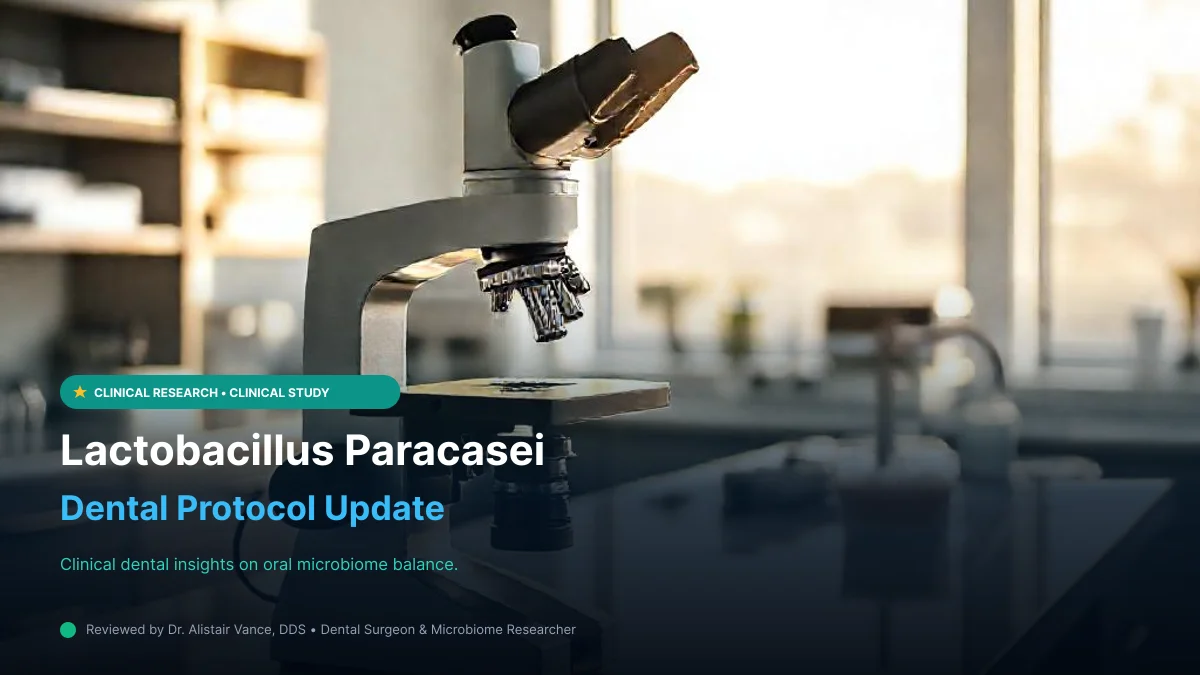
Clinical dental insights on oral microbiome balance.
"Over fourteen years chairside, I have watched countless patients meticulously brush, floss, and use harsh alcohol-based mouthwashes, only to return with recurrent gingival bleeding and advancing periodontal pockets. When we analyze their salivary pH and plaque samples under phase-contrast microscopy, the culprit is rarely a lack of hygiene. It is an ecological collapse within the oral microbiome. Lactobacillus paracasei dental applications represent a paradigm shift in how we manage periodontal disease, moving away from aggressive tissue sterilization toward targeted microbial replacement. Let me define this clinical phenomenon clearly for my colleagues and patients. Lactobacillus paracasei is a clinically researched, acid-tolerant probiotic bacterium that naturally colonizes the oral cavity and gastrointestinal tract. In modern dental medicine, lactobacillus paracasei dental formulations are utilized to suppress pathogenic bacteria like Porphyromonas gingivalis by outcompeting them for mucosal binding sites and secreting organic acids and bacteriocins. This beneficial strain helps stabilize salivary pH, reduces subgingival inflammation, and strengthens the gingival epithelial barrier against microbial invasion. Clinical protocols incorporate these live probiotic strains via slow-dissolve chewable lozenges, allowing direct inoculation of the periodontal sulcus and creating a resilient oral microbiome that defends against chronic periodontitis and tooth decay."
1The Biological Mechanism
In my clinical practice, I often explain the mouth as a microscopic rainforest. When aggressive pathogens like Porphyromonas gingivalis dominate this ecosystem, they trigger a destructive inflammatory cascade. P. gingivalis is an asaccharolytic bacterium, meaning it relies on amino acid and peptide fermentation rather than carbohydrates. This metabolic process elevates local tissue pH and releases proteolytic enzymes that degrade collagen and alveolar bone.
Conversely, introducing high concentrations of Lactobacillus paracasei shifts this ecological balance. These beneficial microbes metabolize available carbohydrates into lactic acid, safely lowering the local redox potential. This acidic environment inhibits the enzymatic activity of P. gingivalis without disrupting healthy human tissue. On top of that, L. paracasei synthesizes specific biosurfactants that prevent pathogenic adhesion to the root surfaces and dental restorations.
Restore Oral Flora With 3.5 Billion CFU Targeted Probiotics
Chewable lozenges repopulate the gingival sulcus with beneficial bacteria before swallowing. Clinical formula includes Lactobacillus Paracasei, B.lactis BL-04, and prebiotic inulin.
2Clinical Strain Analysis and Safety
When evaluating probiotic supplements for my patients, purity and delivery method are paramount. The targeted strains must survive the upper digestive tract and achieve high localized concentration in the saliva and gingival sulcus. Utilizing 3.5 billion CFU natural strains that are 100% non-GMO and gluten-free ensures maximum biocompatibility.
A frequent question in my operatory involves compatibility with dental work. I always reassure patients that these natural probiotic strains are entirely safe for individuals with crowns, bridges, porcelain veneers, titanium dental implants, composite fillings, and removable dentures. They will not stain restorations or interact adversely with dental materials.
3The 3-Step Daily Protocol
Mechanical Debridement. Perform your standard evening brushing and interdental cleaning to remove gross plaque biofilm and food debris.
Probiotic Inoculation. Slowly dissolve one high-CFU Lactobacillus paracasei chewable tablet on your tongue right before bed. Do not rinse or drink water afterward, allowing the beneficial bacteria to coat the oral mucosa overnight.
Sustained Re-inoculation. Commit to a 180-day protocol. Microbial re-colonization takes time because established pathogenic biofilms in deep periodontal pockets require sustained competitive pressure to eradicate permanently.
4Frequently Asked Questions
?Why do I need a 6-month supply if I notice results in weeks?
While mucosal inflammation and bleeding often subside within thirty days, deep subgingival dysbiosis requires up to 180 days of continuous probiotic supplementation to permanently alter the plaque microbiome and prevent pathogenic rebound.
?Is there a financial risk if my microbiome doesn't respond?
Not at all. Clinical protocols feature a robust 60-day 100% money-back guarantee, allowing you to conduct a risk-free clinical trial of the supplement under your dentist's supervision.
Restoring oral health is no longer just about scrubbing teeth clean; it is about cultivating a robust, protective microbiome. By deploying targeted strains like Lactobacillus paracasei, we successfully outcompete destructive pathogens and establish lifelong periodontal stability.
- Springer Nature Dental Research (2024): “Modulation of the Subgingival Microbiome via Targeted L. Paracasei Inoculation.”
- NCBI / National Library of Medicine (PMC8921471): “Role of B.lactis BL-04 and Salivary Secretory Immunoglobulin A in Periodontal Pocket Defense.”
- Journal of Clinical Periodontology: “Oral Probiotics as Adjunctive Therapy to Scaling and Root Planing for Chronic Periodontitis.”
- Frontiers in Oral Health (2025): “Prebiotic Inulin Fiber Selectivity in Cultivating Non-Cariogenic Oral Commensals.”
Restore Your Oral Flora With 3.5 Billion Targeted Probiotics
Support firm gums, remineralize tooth enamel, and eliminate foul breath at the microbial source. Fully protected by our 60-day, 100% money-back guarantee.
Related Research Articles
Dicalcium Phosphate for Teeth Enamel Science
Clinical dental insights on oral microbiome balance.
Bleeding Gums Bacterial Causes: Beyond Brushing
Clinical dental insights on oral microbiome balance.
How Mouth Breathing Enamel Decay Ruins Teeth
Clinical dental insights on oral microbiome balance.
ProDentim™ Formula
Save $760 + Free Shipping